

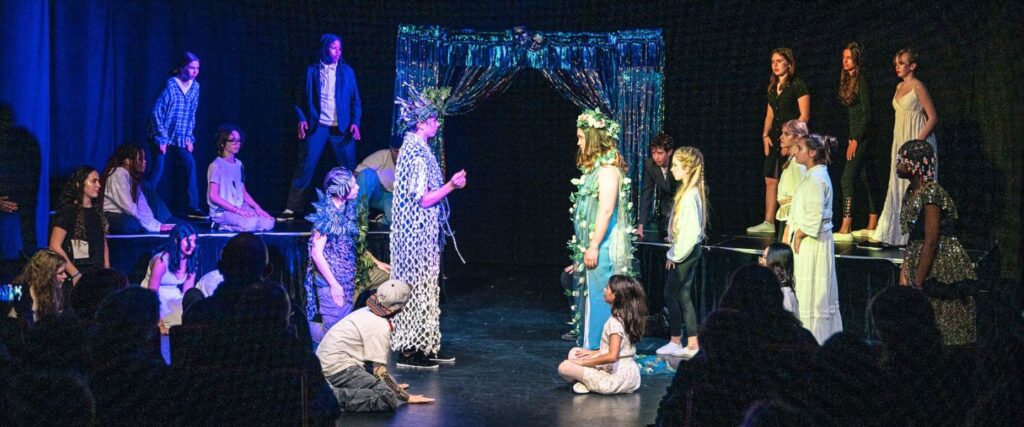
Why is Theatre such an integral part of student education and what really is the value of the learnt skills? Teaching theatre is not entirely training actors. While that is part of it, it surmounts to so much more. It is shown to boost confidence, teach collaboration skills, enhance critical and creative thinking abilities, better an individual’s self-esteem and understanding of their identity, and to have fun and play.
Working with the southern African philosophy of Ubuntu, umuntu ngumuntu ngabantu, which can be interpreted as ‘I am because we are,’ theatre can be seen to connect with our community in understanding this human experience.
Theatre in the Curriculum
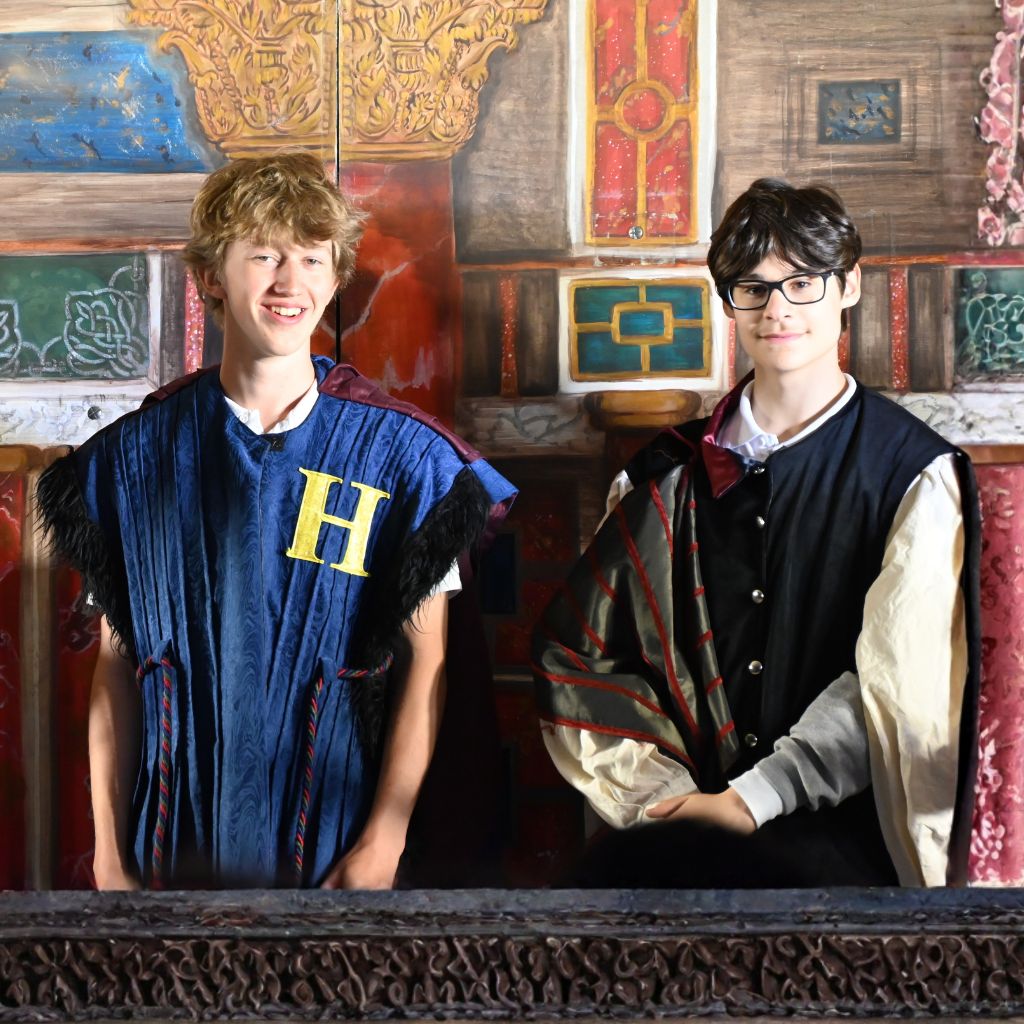
At International Sharing School – Taguspark, Lisbon , Theatre is a concept-based and practical exploration into the performing arts. Students get the opportunity to experience creating pieces of performance from different global perspectives and various technical focuses, inside and beyond the classroom.
As part of the curriculum from MYP1 to 5, students explore various styles of theatre from different contexts in terms of space and time. We look at ancient African Storytelling traditions, Italian Commedia dell’Arte, Mime, Shakespeare, Realism, Epic Theatre and Absurdism.
Students not only develop the ability to investigate sources and content related to these movements, but they critique plays and performances of these styles. Usually working in collaboration with others, students get the opportunity to create performances, finding ways of integrating the elements of theatre.
Taking a balanced approach into consideration, the students develop their ability to provide constructive feedback to one another and reflect on their own growth and the success of their performances.
Productions and Performance Opportunities
Beyond the classroom, there are various activities that students can do in the senior school. We have our annual senior school production where we put on a musical theatre show with students from MYP1 to DP2.
This is a phenomenal opportunity for students to collaborate across different year groups and in a way that is purely based on skill development.
Working on performance skills such as acting, singing, dancing, and characterization, students learn a lot.
Over the past couple of years, we have put on a school revue production entitled New Beginnings (2024) and Footloose: Youth Edition (2025). In early 2026, we presented our stage version of The Wizard of Oz: Youth Edition.
Student-Led Creative Teams and Spaces
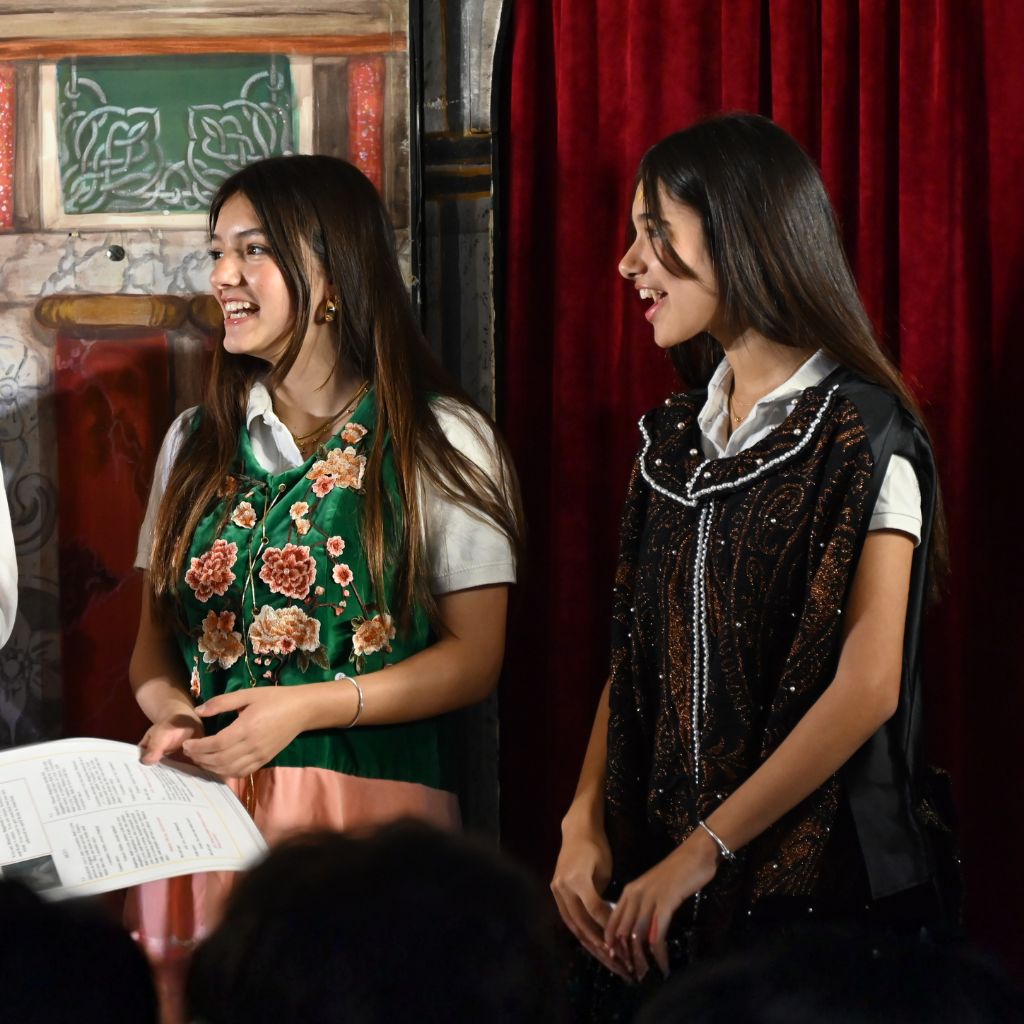
With this latest production, we have been more focused on developing various student teams such as costume designers, backstage crew, front of house, technical lighting and sound designers, and set designers.
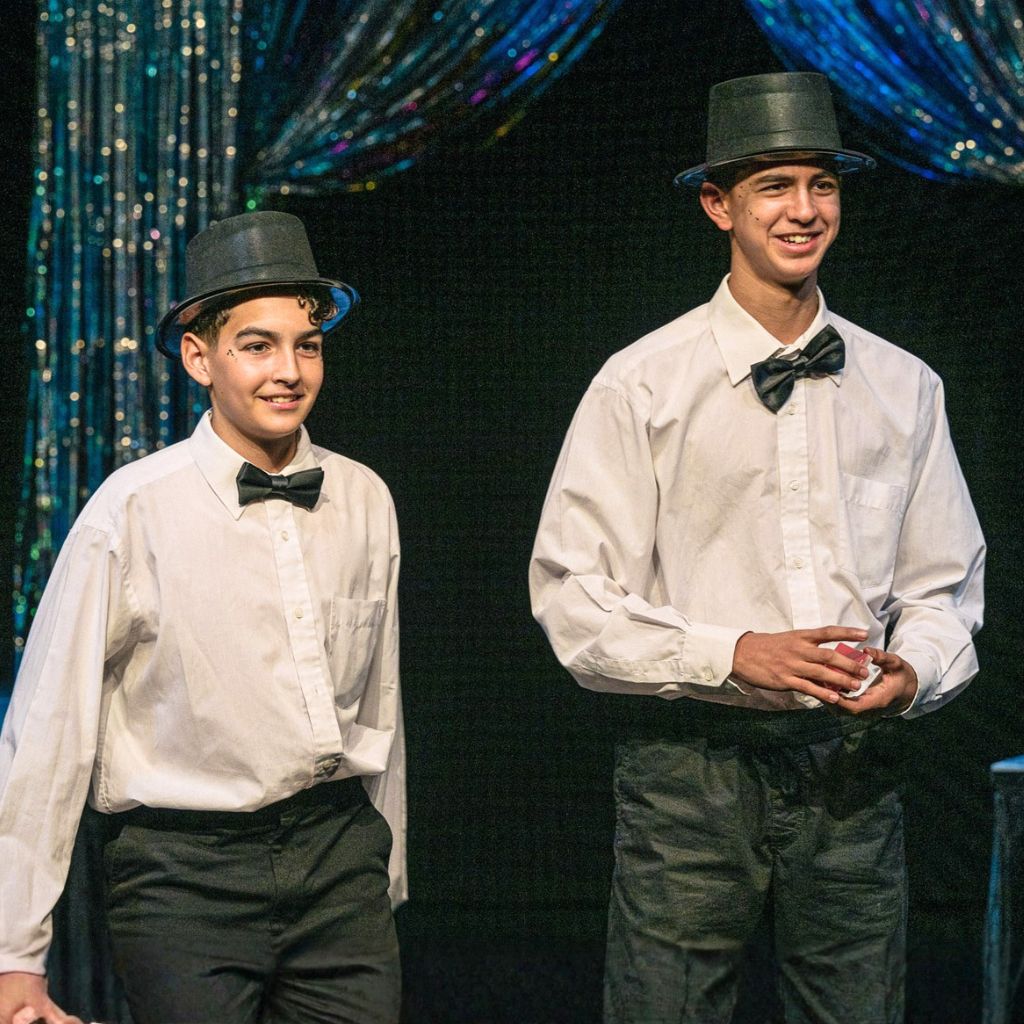
Led by various teacher mentors, the groups worked autonomously to creatively design aspects for the show and prepare for its run in February.
Getting students to work in environments that inspire them in theatrical training is important to us and so we have designed the Theatre Lab which is both a laboratory for workshopping skills and performing to our community.
With open space, specialized lighting, and a backstage structure with props and costume, students navigate the room as though it is a professional environment.
Experiencing and Appreciating Theatre
Another aspect we integrate into the programme is to teach students the value of simply watching theatre, not only with a critical eye and outcomes for educational purposes, but to simply enjoy the art form. We bring companies like Calliope Theatre and ArtedNet to show performances to the students.
Additionally, to improve student inquiry and research tools, we use technological aspects in the classroom like Digital Theatre+, which is a platform where students can watch theatre, read articles by academic writers and watch tutorial videos on how to improve skills in various ways.
By providing students with the space to be creative and to collaborate, the goal is to one day have students run all-things-theatre on their own, being mentors for one another, and being able to express themselves freely.